The First Cycle of the Theology Course is an initiation to give the student a Synthetic view of the Christian Mysteries and of the main Fundamental Theological Disciplines.
Licentiate In Theology (L.Th.)
Course Outline

1. Objectives
- to provide the students with an in-depth grasp of the subjects of their specialization.
- to provide the students with a comprehensive way of understanding theology through inter-disciplinary research.
- to help the students to acquire methodological skills through guided research.
2. Specializations
The Theology Faculty offers Licentiate in Theology with the following courses of specialization:
- Licentiate in Systematic Theology
- Licentiate in Moral Theology
- Licentiate in Biblical Theology
3. Eligibility
The L.Th. Programme is open to the Catholics and non-Catholics, men and women. A student is enrolled for L.Th. Programme when the following requirements are fulfilled:
- The student should hold a Degree of Baccalaureate in Theology from an Ecclesiastical Faculty of Theology or an Institute Affiliated or Aggregated to the Faculty of Theology.
- An applicant who has completed the regular five-year course in Theology which includes first two years of Philosophy in a Catholic Major Seminary and secured 60% aggregate marks in the examinations elsewhere which is not a Faculty, is admitted with a qualifying examination to the Cycle II Programme considering the merit in each case.
- The three-year diploma holders of theology are admitted to Cycle II without receiving the ecclesiastical degree of baccalaureate provided they attend the courses and examinations prescribed by the Faculty Council and submit a Thesis.
- The student has to produce a letter of authorization/permission from the concerned superior.
- The student may have proficiency in English language.
- The students who do the Licentiate in Biblical Theology should have a basic knowledge of Greek and Hebrew languages, if not, they should do a basic course in those languages.
4. Registration
- To be registered to the L.Th. Programme, the candidate has to fill-in the application form provided by the Institute. The application form can be obtained from the Office at request.
- The duly filled-in application form, attached with a passport-size photo, has to be submitted to the Office.
- The filled-in application form has to be accompanied by the approval/no objection letter. In the case of any other Catholic applicant, a testimonial letter of the applicant’s local Ordinary/Hierarch; in the case of a non-Catholic applicant, a letter of a higher ecclesiastical authority of the respective church/ecclesial community; in the case of lay candidates, Catholic or non-Catholic, application should be accompanied with a testimonial letter from a competent person acceptable to the Pontifical Institute of Theology, preferably a certificate from the parish priest attested by a higher ecclesiastical authority.
- Photo-copies of all the relevant certificates, mark lists and documents of other studies accomplished have to be submitted at the time of registration.The students enrolled for the L.Th. Programme are expected to participate in every academic activity of the Institute.The registration fees should be paid along with the application. The Student has to complete the course within five years from the day of registration. For additional years a fee of Rs. 1000.00 will be charged annually as fine. The registration will be cancelled if students fail to pay the fine.Scholarship may be given only for the first two years. It may be given for the first three years in the case of students of Biblical Theology.
5. Organization of Licentiate Programme in Theology
- Licentiate in Theology is offered in three branches: Systematic Theology, Moral Theology and Biblical Theology.
- The Courses in Licentiate in Theology consist of more profound study of selected subjects and a practice of deeper scientific research by students in the area of specialization.
- The L.Th. programme is a four-semester course with 120 credits (1 credit = 25 study-hours which includes lecture hours, self-study, assignments and practical hours; 1 credit carries 20 marks). These credits are divided as follows: 42 credits for the Obligatory Subjects, 12 credits for Auxiliary Subjects, 12 credits for Interdisciplinary Common Subjects, 6 credits for Seminars, 4 credits for Research Papers, 6 credits for Tutorials, 6 credits for Field Studies, 6 credits for Languages, 3 credits for Methodology, 3 credits for Review of Literature, Conferences, Annual Lectures, Extension Lectures, 10 credits for Comprehensive viva voce, and 10 credits for Thesis and Defence.
- The student has to write a guided scientific Research Paper in the form of a mini licentiate thesis under the guidance of a professor in theology faculty about ten pages excluding the bibliography as a part of developing his/her licentiate thesis (4 Credits)
- The student gets 6 credits for Tutorials, which are generally in the form of discussions – a paper presented at D.Th / L.Th Research Scholars’ Seminar (2 credits), Two Zacharias memorial lectures (1 Credit each), Two extension lectures (1 Credit each)
- The student has to do a Field Study (theological project) – undertake a project, with the help of his or her thesis guide, either in the form of an exposure or a survey or field study which may enable him or her to deepen the research work by making applicable it in one’s own life and in the life of the Church as a whole (6 Credits).
- The student has to learn two foreign languages (3 Credits each)
- The student has to review three theological books and attend a colloquium conducted by KCBC or attend in any other theological conferences conducted by any catholic faculty (3 Credits)
- If a student joints for the L.Th. programme in Biblical Theology, he or she may undergo a Propaedeutic year in which language courses (Biblical Greek I and II, Biblical Hebrew I and II and modern languages) and introductory courses are offered.
- The students select their courses in consultation with the Co-ordinator of the L.Th. programme.
- The student will not be allowed to do more than 60 credits in the first year (in the first two semesters).
- All the students are expected to participate in the D.Th./L.Th. Research Seminar conducted every semester.
6. Examinations
- The student shall do the examination in individual courses according to the prescribed schedule and mode.
- The student can present himself/herself for the final comprehensive oral examination only after completing all the examinations and other requirements.
- For the final comprehensive oral examination, the candidate submits 18 topics from the subjects covered during the programme. The Dean of Theology chooses 10 topics out of the list and 3 Professors examine the student on the chosen topics for 10 minutes each.
- The topic for Thesis of the Licentiate is chosen at the beginning of the III semester. The Guide of Thesis is chosen by the student and approved by the Faculty Council. Three copies of the schema (10 to 15 pages) shall be submitted to the office. For preparing the schema, the student shall follow Research Methodology: Guidelines for Scientific Writing, Part I, Chapter 6.
- The scrutiny of the proposals of the schema for the Thesis of the Licentiate is approved by the Faculty Council or a Commission appointed by the Dean.
- A panel of two Scrutinizers for schema appointed by the Faculty Council or a Commission appointed by the Dean approves the schema as per the suggestions given to them.
- If the thesis is not submitted in 2 years from the date of approval, the process has to be repeated and the new approval is to be sought from the Faculty Council.
- L.Th. Thesis should have not less than 100 pages. It has to be in printed form. For writing the thesis, the student shall follow the typographic guidelines given in Research Methodology: Guidelines for Scientific Writing, Part II.
- A student submits the Thesis of the Licentiate for approval, to the Faculty Council through the L.Th. Co-ordinator with the recommendation of the Guide of the Thesis. Three copies of the Thesis shall be submitted to the office for approval.
- A panel of two Readers appointed by the Faculty Council or a Commission appointed by the Dean approves the Thesis as per the suggestions given to them and recommends to the Faculty Council for the final approval. Once the Thesis is accepted by the Faculty Council, the Dean takes necessary action for the defence.
- The Thesis shall be defended before a panel of examiners appointed by the Faculty Council. Four copies of the Thesis shall be submitted to the office for defence.
- The L.Th. defence is conducted with the following procedures: The candidate is given 20 minutes to expose the material. The guide examines him/her for 20 minutes, which is followed by the examinations of first reader for 15 minutes and the second reader for 10 minutes. Finally, the public may also be given 5 minutes for questions and clarifications.
- The Thesis carries hundred marks in all: Eighty percent for the written work and twenty percent for the defence.
- The Degree of Licentiate in Theology (L.Th.) is conferred on students who complete successfully the courses of four semesters of specialization in Systematic Theology, Moral Theology, or Biblical Theology. They have to pass all the examinations including the comprehensive viva voce with 50% marks as well as the presentation of a Thesis of 100 pages defended publicly. Besides, they have to fulfil all other requirements of the Cycle II. Total marks of the examinations are decided as per the system that 1 credit carries 20 marks.
- Certificate of Licentiate Degree in Theology will be issued only after the verification of the aforesaid norms and conditions.
7. Grading System
- 90-100 % High Distinction (Summa cum laude)
- 80-89 % Distinction (Magna cum laude)
- 70-79 % First Class (cum Laude)
- 60-69 % Second Class (Bene Probatus)
- 50-59% Third Class (Probatus)
8. Venue of the Class and Attendance
The classes will be organized in the classroom of the Central Administrative Office as well as in both Campuses. Students are expected to attend all lectures without neglect, carry out all prescribed academic assignments and participate in the regular activities of the Institute. For any period of absence, the L.Th. Coordinator or Dean of Studies is to be informed beforehand. Those who are absent in more than one third of expected attendances will have to repeat the course.
Programme Of Study For Licentiate In Theology
Systematic Theology (LST)
Co-ordinator: Rev. Dr Thattacherry Antony (Manoj John)
1. Obligatory Subjects in Systematic Theology (OST)
(Any 14 subjects: 42 credits)
CODE – OST 01 | Theology of Grace in the Context of Ecumenism | CREDITS – 3
CODE – OST 02 | Postmodernism and Religion | CREDITS – 3
CODE – OST 03 |Christology in the Asian Context | CREDITS – 3
CODE – OST 04 | Theology of Ministry and Leadership in the Church | CREDITS – 3
CODE – OST 05 | Jesus’ Humanity: Credibility for Human Transcendence | CREDITS – 3
CODE – OST 06 | Origin and Theological Development of the Nicene Creed | CREDITS – 3
CODE – OST 07 | Eucharist: Fons et Culmen of the Nuptial Love of Christ The Spouse Spouse | CREDITS – 3
CODE – OST 08 | Newman: Doctrinal Development & Liturgy | CREDITS – 3
CODE – OST 09 | The Doctrine of the Person of Christ | CREDITS – 3
CODE – OST 10 | Classical Christology | CREDITS – 3
CODE – OST 11 | Between Tradition and Modernity: Challenges and Tensions in Theology | CREDITS – 3
CODE – OST 12 | Political Theology | CREDITS – 3
CODE – OST 13 | Contemporary Issues in Sacramental Theology | CREDITS – 3
CODE – OST 14 | Theology of Aesthetics of Hans Urs von Balthasar | CREDITS – 3
CODE – OST 15 | Anthropological Pneumatology | CREDITS – 3
CODE – OST 16 | Theology of Interreligious Dialogue | CREDITS – 3
CODE – OST 17 | Perichoresis Love of Trinity as a Focus of Christian Living | CREDITS – 3
Auxiliary Subjects in Systematic Theology (AST)
(Any 4 subjects: 12 credits)
CODE – AST 01 Hindu-Christian Hermeneutics | CREDITS – 3
CODE – AST 02 Biblical Models in Ecclesiology | CREDITS – 3
CODE – AST 03 Theology of Love | CREDITS – 3
CODE – AST 04 The Development of Christian Theology | CREDITS – 3
CODE – AST 05 Church as the Mystery of Communion | CREDITS – 3
CODE – AST 06 Catholic Theology of Religions | CREDITS – 3
CODE – AST 07 The History and Development of Theology | CREDITS – 3
CODE – AST 08 Ecotheology | CREDITS – 3
Interdisciplinary Common Subjects (IST)
(Any 4 subjects: 12 credits)
CODE – IST 01 | Word Proclaimed and Celebrated in the Liturgy | CREDITS – 3
CODE – IST 02 | Business Ethics | CREDITS – 3
CODE – IST 03 | Eco Friendly Human Life | CREDITS – 3
CODE – IST 04 | Development of Theology in the Post Patristic Period | CREDITS – 3
CODE – IST 05 | The Pastoral Vision of Pope Francis | CREDITS – 3
CODE – IST 06 | Marriage is a Vocation to Communion of Persons | CREDITS – 3
CODE – IST 07 | Social Concern in Luke | CREDITS – 3
CODE – IST 08 | Sacrament of Reconciliation: Pastoral Canonical Issues | CREDITS – 3
CODE – IST 09 | Ecological Ethics | CREDITS – 3
CODE – IST 10 | Marian Theology in the Context of Ecumenical Dialogue | CREDITS – 3
Seminars in Systematic Theology (SST)
(Any 2 subjects: 6 credits)
CODE – SST 01 | Theology of Dialogue in a Multi-religious Context | CREDITS – 3
CODE – SST 02 | Synodal Approaches in Theologizing | CREDITS – 3
CODE – SST 03 | Dalit Theology | CREDITS – 3
CODE – SST 04 | Theological Dimensions of Women Movements | CREDITS – 3
Subjects: 72 credits
Research Papers: 4 credits
Tutorials: 6 credits
Field Studies: 6 credits
Languages: 6 credits
Methodology: 3 credits
Reviews, Conferences, Annual Lectures, Extension Lectures: 3 credits
Comprehensive Viva voce Examination: 10 credits
Thesis and Defence: 10 credits
Total credits: 120
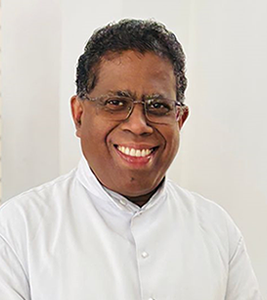
DEAN
Rev. Prof. Gregory R.B.
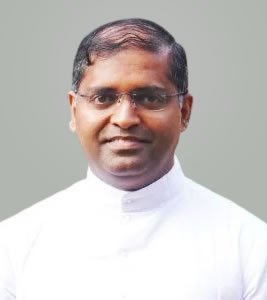
ASSOCIATE DEAN
Rev. Prof. Chennattu Augustine
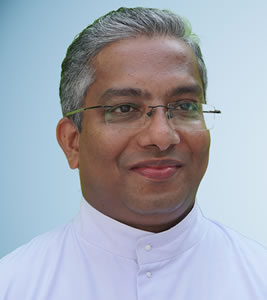
GENERAL
CO-ORDINATOR
Rev. Dr. Bijoy Augustine Marottickal
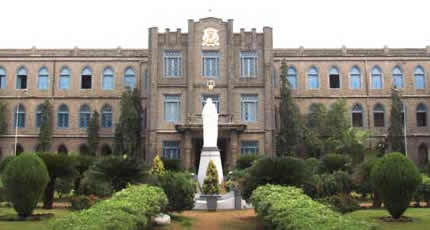
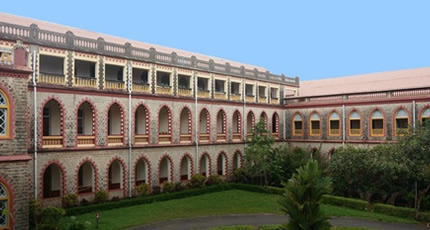
Our Campuses
A Sacred Space for Formation, Reflection, and Growth. A Place Where Vocations Are Nurtured and God’s Call is Answered.